
Website Rendering Techniques.
This Blog Contains A Brief Overview Of Rendering Techniques Of Websites.
December 25, 2025
Listen to Summary
~1 minGet a quick audio overview of this article.
1. Client-Side Rendering (CSR)
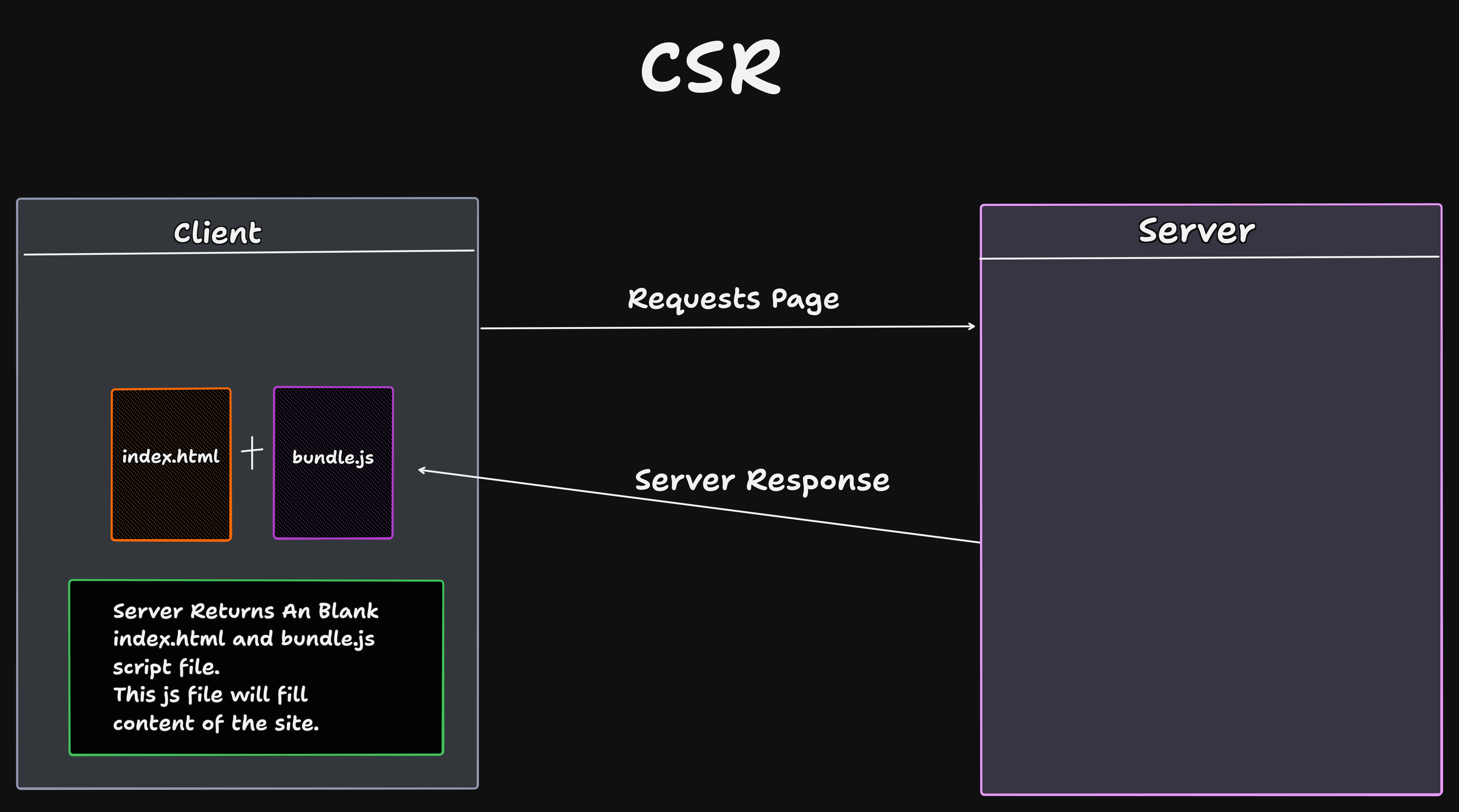
Client-Side Rendering (CSR)
In Client-Side Rendering, the browser downloads a mostly empty HTML file and uses JavaScript to build the page dynamically.
Pros
- Smooth, app-like user experience
- Good for highly interactive applications
Cons
- Slower initial page load
- SEO can be challenging without optimization
Best For
- Dashboards
- Web apps
- Single Page Applications (SPAs)
example.jsx
1"use client";
2
3import { useEffect, useState } from "react";
4
5export default function Page() {
6  const [message, setMessage] = useState("");
7
8  useEffect(() => {
9    setMessage("This page is rendered on the client");
10  }, []);
11
12  return <h1>{message}</h1>;
13}
2. Server-Side Rendering (SSR)

Server-Side Rendering (SSR)
With Server-Side Rendering, the server generates a fully rendered HTML page before sending it to the browser.
Pros
- Faster first page load
- Better SEO and accessibility
Cons
- Higher server load
- Slightly slower page transitions
Best For
- Content-heavy websites
- Blogs
- SEO-focused platforms
example.jsx
1export async function getServerSideProps() {
2  return {
3    props: {
4      message: "This page is rendered on the server",
5    },
6  };
7}
8
9export default function Page({ message }) {
10  return <h1>{message}</h1>;
11}
3. Static Site Generation (SSG)
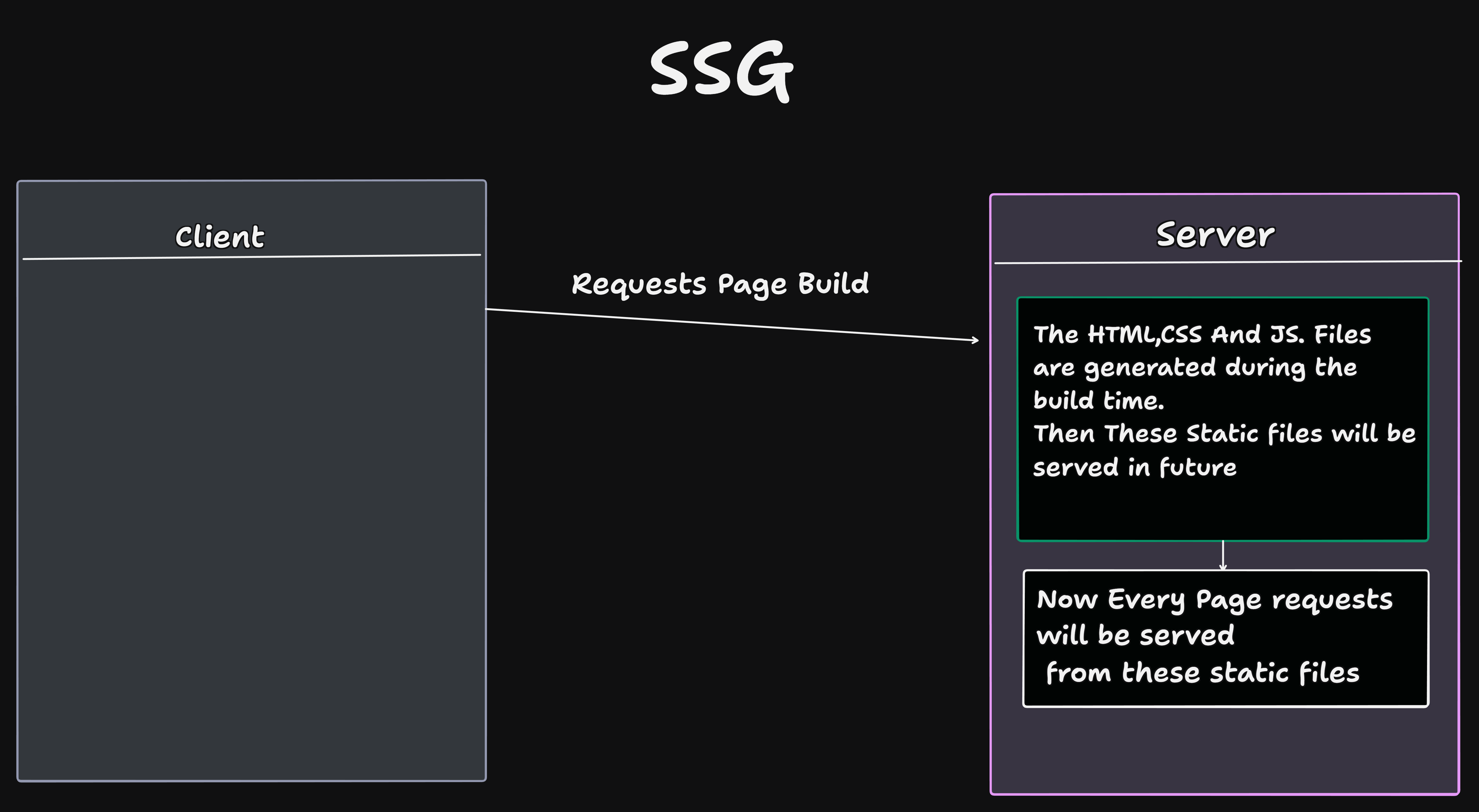
Static Site Generation (SSG)
Static Site Generation creates HTML pages at build time and serves them as static files.
Pros
- Extremely fast performance
- Very secure and scalable
Cons
- Content updates require rebuilding the site
Best For
- Blogs
- Documentation sites
- Landing pages
example.jsx
1export async function getStaticProps() {
2  return {
3    props: {
4      message: "This page is statically generated at build time",
5    },
6  };
7}
8
9export default function Page({ message }) {
10  return <h1>{message}</h1>;
11}
Written with ❤️ by Akarsh Jha